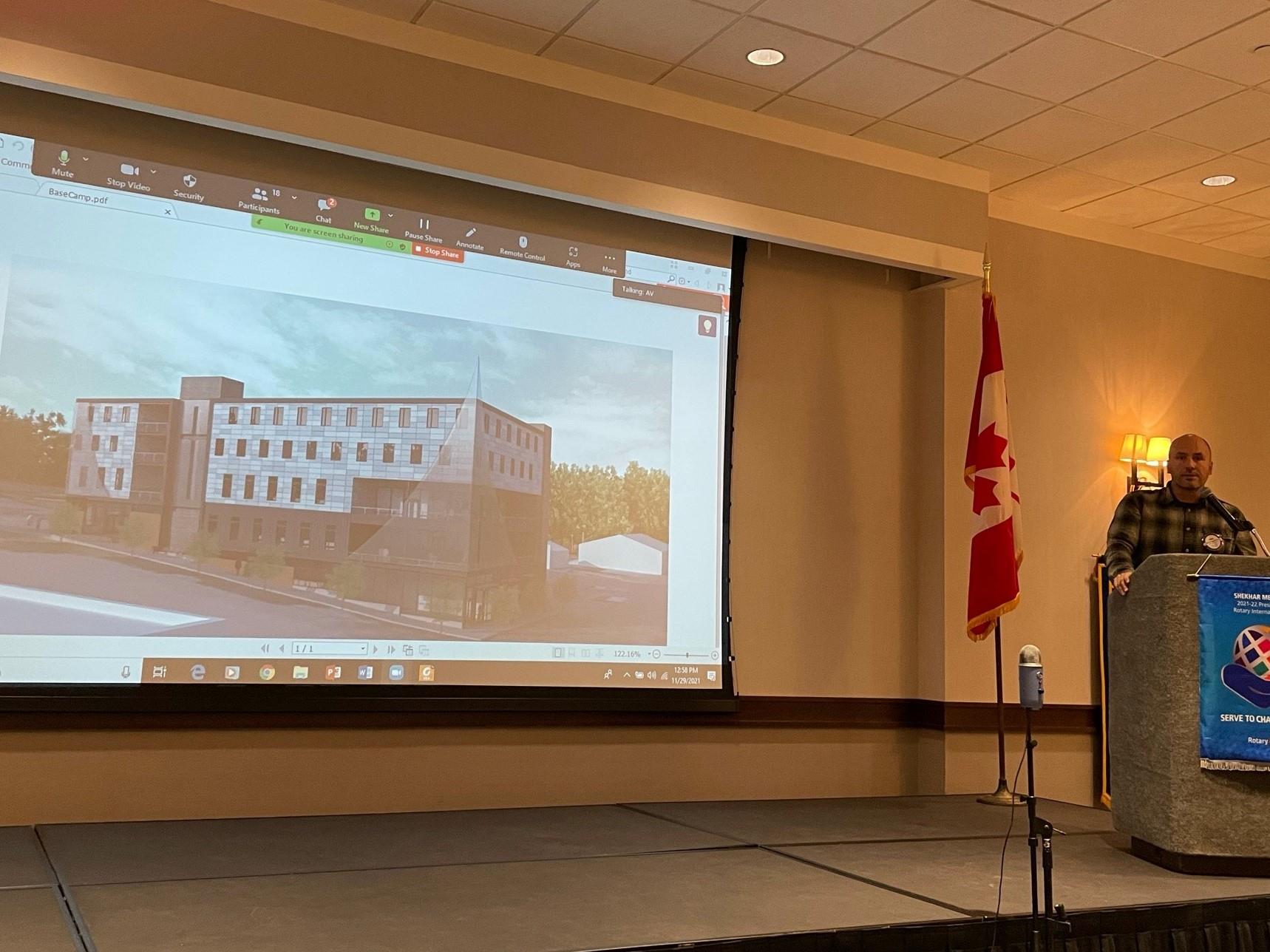
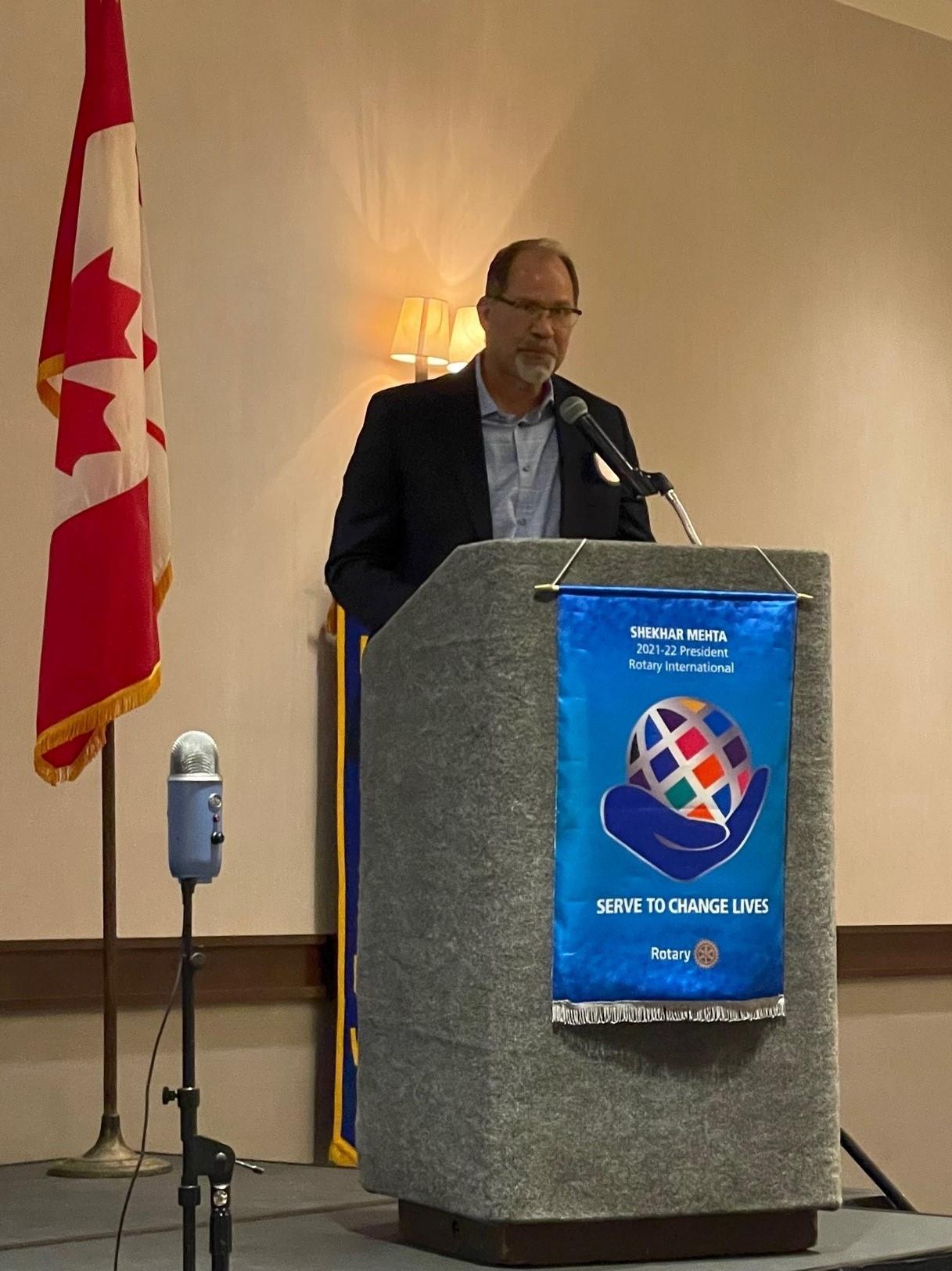
Club member Hans-Erchinger Davis, President and CEO of Lighthouse Mission Ministries, gave an update on the Mission's emergency shelter, Base Camp, located on Cornwall Ave. He reminded us that Base Camp replaced the emergency shelter at Bellingham High School, which in turn replaced the Drop-In Center on Holly Street that quickly became overwhelmed when the pandemic first hit. Base Camp is a temporary solution – a steppingstone - that will close in three years when its lease expires. The Lighthouse Mission itself will be rebuilt in that time and greatly expanded and modernized to be able to serve more of those in need in our community. For reference, Hans reported that 219 persons stayed overnight at either Base Camp or the Drop-In Center (serving as overflow) over the weekend, and about another 100 received services during the daytime. The new Lighthouse Mission building will approximately double the total capacity of the three current facilities and will include helpful features such as micro-shelters and retail space that can provide jobs to qualified residents.
In addition to the brick-and-mortar update, Hans discussed his own feelings and experiences serving the homeless, who are a varied group living with the stresses of the street. They are commonly the elderly, the medically fragile, those suffering with substance abuse or mental illness. His experience is that all need support and human connections, and that loneliness is a sad hallmark of being homeless. Nothing gives him more satisfaction that seeing a client reconcile with their family as they progress toward recovery. Hans came to the mic with what he called “a sitting ovation” but left the stage to a standing ovation.
Program:
From Doug Cole, Program Coordinator:
I sensed that many attending the meeting this week were hoping to learn more about the causes and remedies regarding the homeless situation in Bellingham and elsewhere. We did learn how Base Camp and The Opportunity Council handle those facing homelessness but not how they might have found themselves in that position. I asked Hans Erchinger-Davis, President & CEO of Lighthouse Mission Ministries which operates Base Camp, if he could summarize. His reply:
Homelessness is complicated. You’ve got adverse childhood experiences, lack of education and job skills, wage disparity, serious mental illness, alcohol and drug and canabis addiction, human trafficking, family dysfunction, young people aging out of the foster care system, lack of affordable housing, and so much more. It’s a multifaceted problem in need of a multifaceted solution.
Below are links to a series done recently to help our community better understand homelessness and how the Mission is helping.
(Watch for the combined documentary coming out in the next couple weeks. )
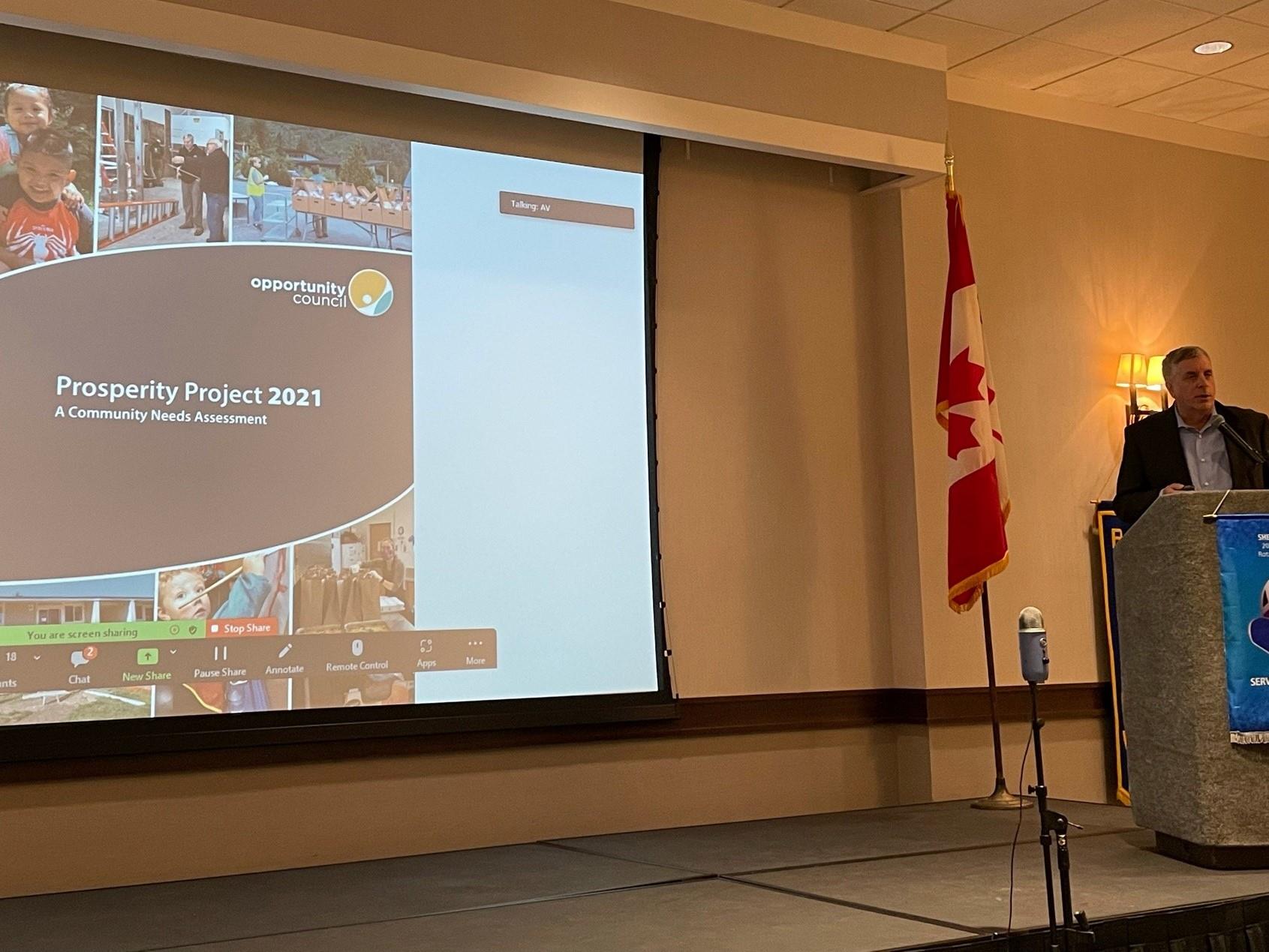
Program Chair Doug Cole introduced Greg Winter, Executive Director of Opportunity Council, who in turn introduced Teri Bryant, who leads the organization in their Homeless Services effort. Greg has long worked in support of the homeless prior to becoming Executive Director. Teri has herself been working in low-income housing since 2009, and was a founder of the Black Drop Coffeehouse in 2002. Working in downtown Bellingham inspired Teri to get further education (Human Services at WWU) to serve this population in a more meaningful way.
Before introducing Teri, Greg gave a brief update on Recovery House, one of the Opportunity Council's programs and a prior recipient of a Major Project grant from RCOB. Completion of the house was delayed by Covid but is now complete. They are searching for staff now and expect to open very soon. In the meantime, Recovery House has served as a temporary shelter for senior-citizen flood victims from Sumas and surrounding communities.
He also presented the results of a recent comprehensive survey of homeless people in our community about their needs and priorities, as well as feedback on perceived availability of services and support. Of the 14-15 categories, the three resources with the highest overall need and lowest availability are: 1) Housing, 2) Employment and 3) Affordable Dental Care. Of course, these priorities are different for different groups of homeless, but housing is clearly a critical issue. Teri took it from there.
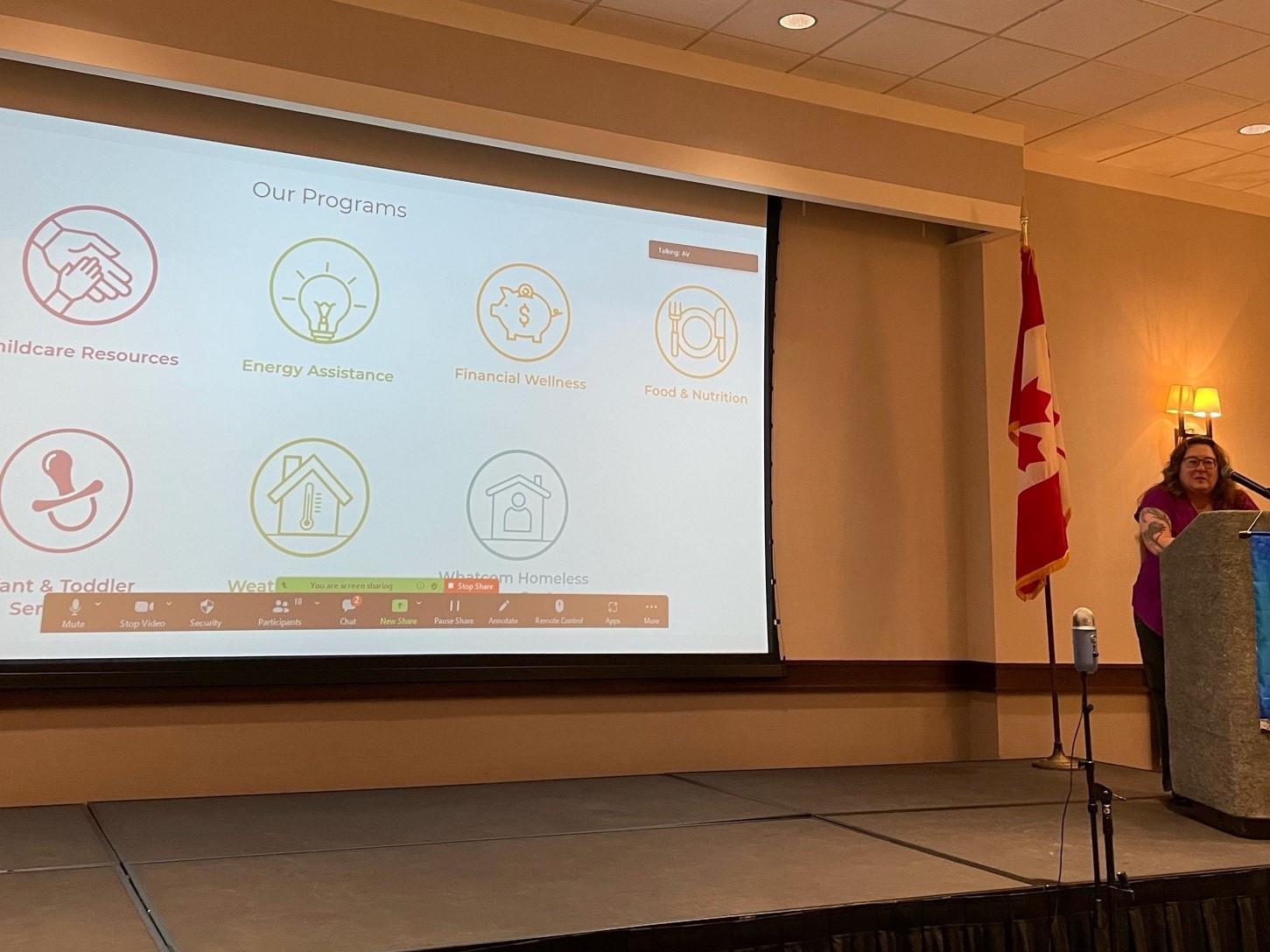
Teri Bryant introduced the Whatcom Homeless Service Center (“WHSC”), which is led and administered by the Opportunity Council. Its goal is to better coordinate the delivery of services to the homeless population, with support from local non-profit organizations and partner governmental agencies. Simply put, it handles the organization of services to meet the most needs of the most vulnerable. It is commonly referred to as a “coordinated entry” approach to homeless services, so that the burden of negotiating services between partners falls on staff, not the person already trying to manage homelessness and the underlying issues. It’s a big effort, now up to 350 staff at various agencies and non-profits. The Opportunity Council contributes to the effort through their Community Services Department (“CSD” located on Cornwall near Chestnut) and through property management of supportive housing units. There are four main programs of the Whatcom Homeless Service Center:
- Coordinate Entry – see above
- The Homeless Outreach Team (or HOT) which works directly with the homeless in their own setting
- Acting as a fiduciary for funding of rental assistance among various housing partners
- Work on housing retention for the homeless, including working with landlords
Teri made a strong point that housing services are delivered based on the highest need, not on a first-come, first-served basis. The critical goal is keeping people alive, as they are at much greater risk when homeless. There are multiple access points to the Whatcom Homeless Center’s services, though most come through the Opportunity Council’s CSD. All services are started through a single application completed only once.
The WHSC provides three levels of housing intervention:
- Minimal, which is often called diversion. These services may be for those with some support or resources.
- Moderate, which includes transitional housing or “rapid-rehousing” to solve an immediate but short-term homeless challenge. 20 North, Lydia Place and the YWCA are examples.
- Intensive, which typically requires permanent supported housing. This often involves a combination of subsidized housing and case management services.
Much as Hans did earlier in the meeting, Teri asked us to think in personal terms about our neighbors who are homeless. She asked that we consider it a form of poverty; not just fiscal poverty, but a poverty of relationships and support. Lifting people out of this damaging poverty is the purpose of the Whatcom Homeless Service Center.
Covid Report:
Past President Gary Goldfogel reported that hospital utilization from Covid remained fairly stable since last week: there are 28 in-patients with Covid at St. Joseph Hospital (27 last week) and 9 in the ICU (7 last week), none requiring critical care or ventilators. We hope this is a sustainable trend given the recent alerts about a new variant.