Presentations:
Service Fund Grant:
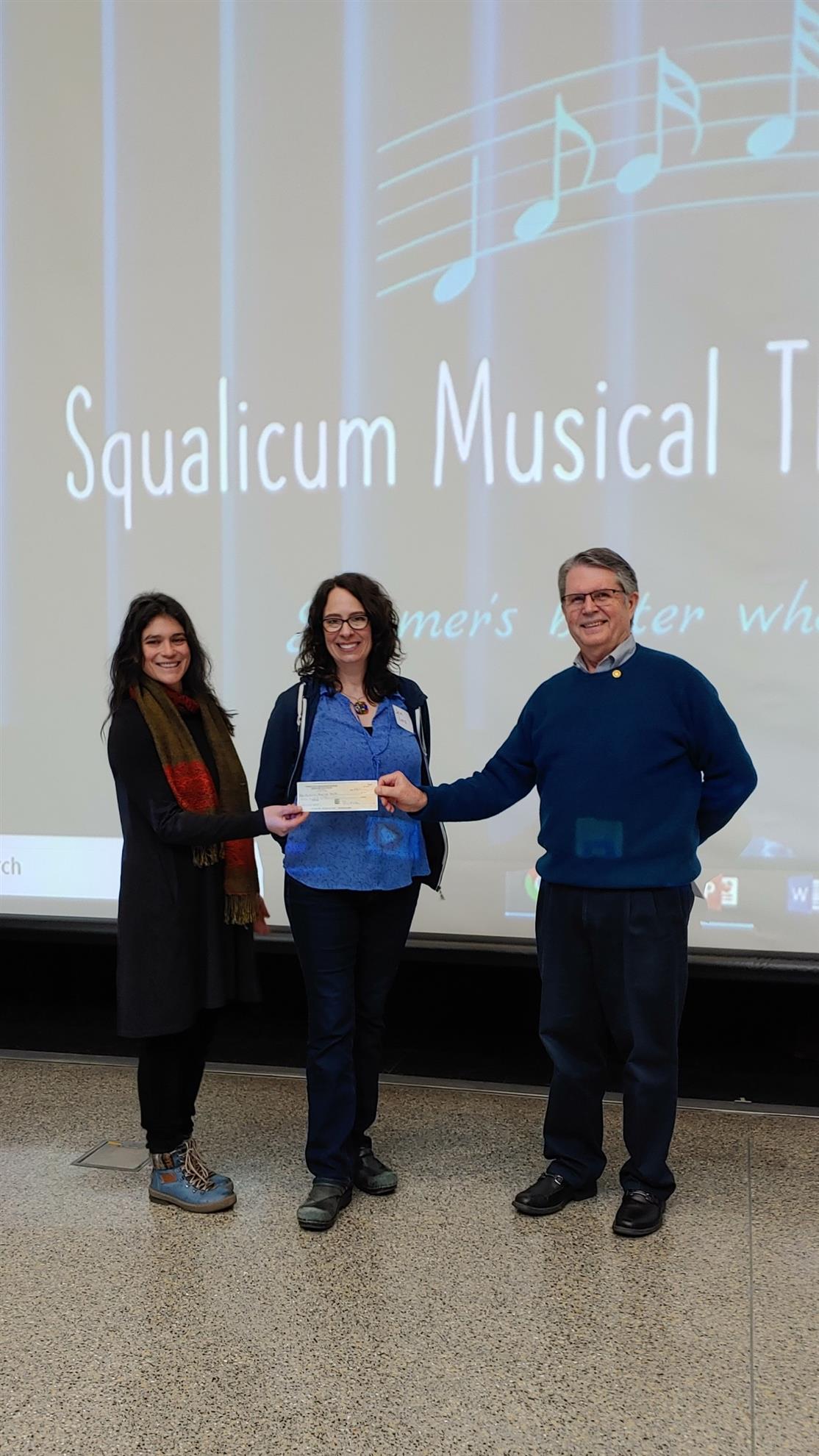
Jennifer Dowd introduced Jen Lois, who accepted a Service Fund grant for the Squalicum Musical Theatre. The Theatre has been going for the past 3 Summers and will be performing Legally Blonde over a three-week period this Summer. Website: SqualicumMusicalTheatre.org
Minister of Fun:
Larry Halgren asked D.C. Morse and Jan Marchbanks how happy they were to no longer own their boat. They were very happy, especially since they gave it to a close relative. Steve Gray was $20 happy for Peoples Bank to receive several “best of” awards in a recent Cascadian Daily poll. Bob Diehl was asked to recall a bit of his grandfather’s history, starting in Pennsylvania, coming to Bellingham to sell bicycles and then opening a Ford dealership in 1908. Doug Cole was asked that, given the recent pay increases at Delta Airlines, if he were tempted to return to flying. He replied yes, but that he had to decline due to his upcoming responsibility to RCOB as its President Elect.
Program:
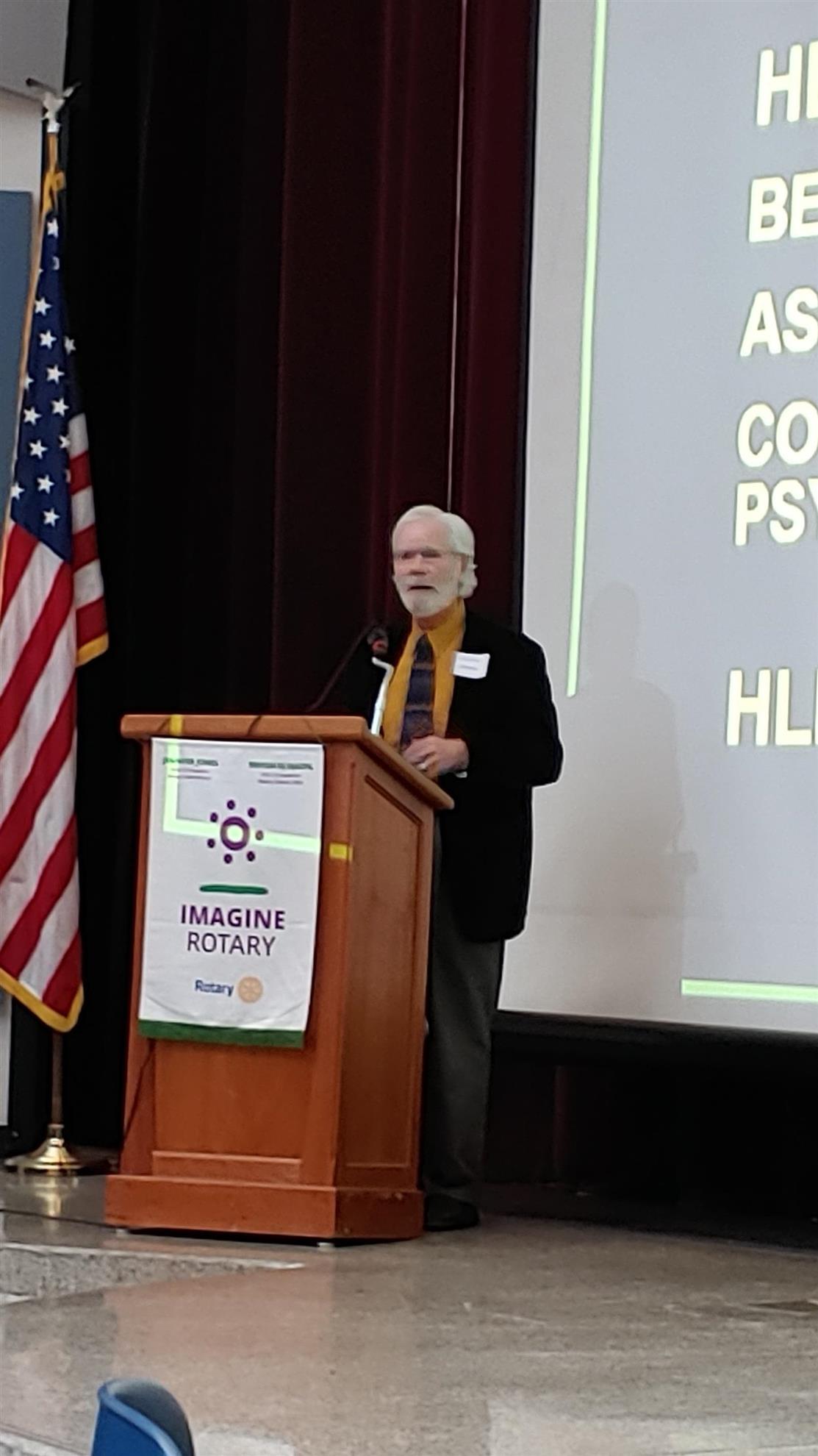
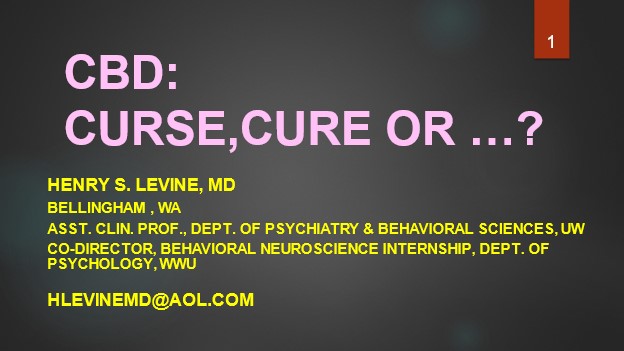
Steve Ban introduced our speaker, Dr. Henry Levine, Assistant Clinical Professor at the UW Department of Psychiatry and Behavioral Science and Co-Director of Behavioral Neuroscience, Department of Psychology at WWU. His topic was CBD: Great Promise, Great Fantasy.
CBD is a cannabidiol, a non-intoxicating and non-addictive constituent of cannabis, better known as marijuana. CBD generated $2 billion in US sales in 2018 as compared to an estimated $22 billion in 2022. An estimated 10% of the US population used CBD in 2018. CBD has been legal – when hemp-derived – in all 50 US states since 2018. It’s available at pharmacies, gas stations, pot shops, supermarkets and even at some Seattle classical music venues.
CBD is a plant chemical, one of more than 400 found in cannabis. Despite being studied extensively, it is still poorly understood. Unlike THC, CBD does not make you high. CBD is thought to oppose the action of THC on the brain in key areas of emotional control. The most prevalent uses of CBD are for psychiatric symptoms such as anxiety, sleep loss, depression and PTSD. A purified and very expensive form of CBD is used to treat rare forms of childhood epilepsy. CBD should not be used during pregnancy, because it crosses the placenta into the fetal circulation and can cause birth defects, including in the brain.
There are three sources of CBD: Pharmaceutical grade Epidiolex, a controlled substance and very expensive; hemp, grown legally in the US and marketed OTC; and the marijuana plant, legal in some states. It’s extracted from flowers and leaves, not stalks or seeds. The safest extraction is by CO2 and alcohol, although there are a variety of other chemical methods, such as naphtha, which are toxic. Hemp is a cannabis plant containing less than 0.3% THC. However, some of the CBD sold as hemp-derived is laced with some marijuana, having a much higher THC content. In all states, CBD from hemp is available OTC. The FDA is concerned about unsubstantiated claims of CBD benefits, deceptive labeling and impurities in production.
Why do so many persons use CBD when there is little or no true scientific evidence of efficacy? For some, it provides a sense of self-control over health and illness, as a result of advertising and website hype; another words, any benefit is obtained mainly as a placebo effect. There is little government oversight.
What CBD products can a patient find? Gummy candy, oil, tincture, tablets, lozenges, vape fluids, cigarettes, gum, pizza, cheeseburgers, soda, water, tea, wine, hand cream, soap, shampoo, toothpaste, pet food, skin patches and even CBD-emitting pillow cases!
In closing, Dr. Levine emphasized that CBD, although harmless except for your wallet, derives most of its benefit from the placebo effect due to aggressive marketing and social media. His goal is to educate both the medical community and the public.
Closing:
President Paul thanked those members who assisted with today's meeting and rang us to adjournment at 1:30PM.