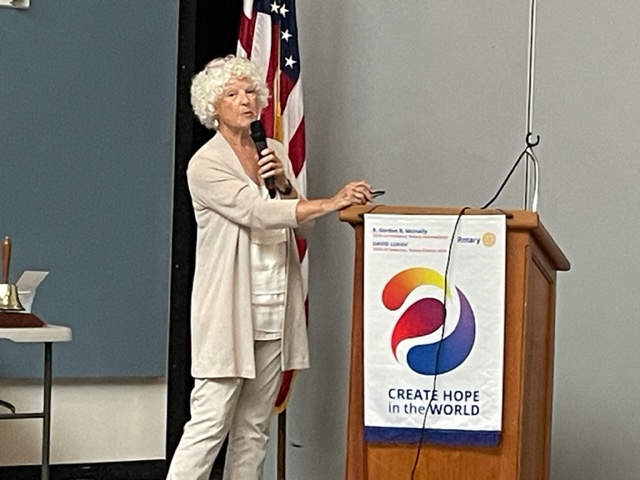
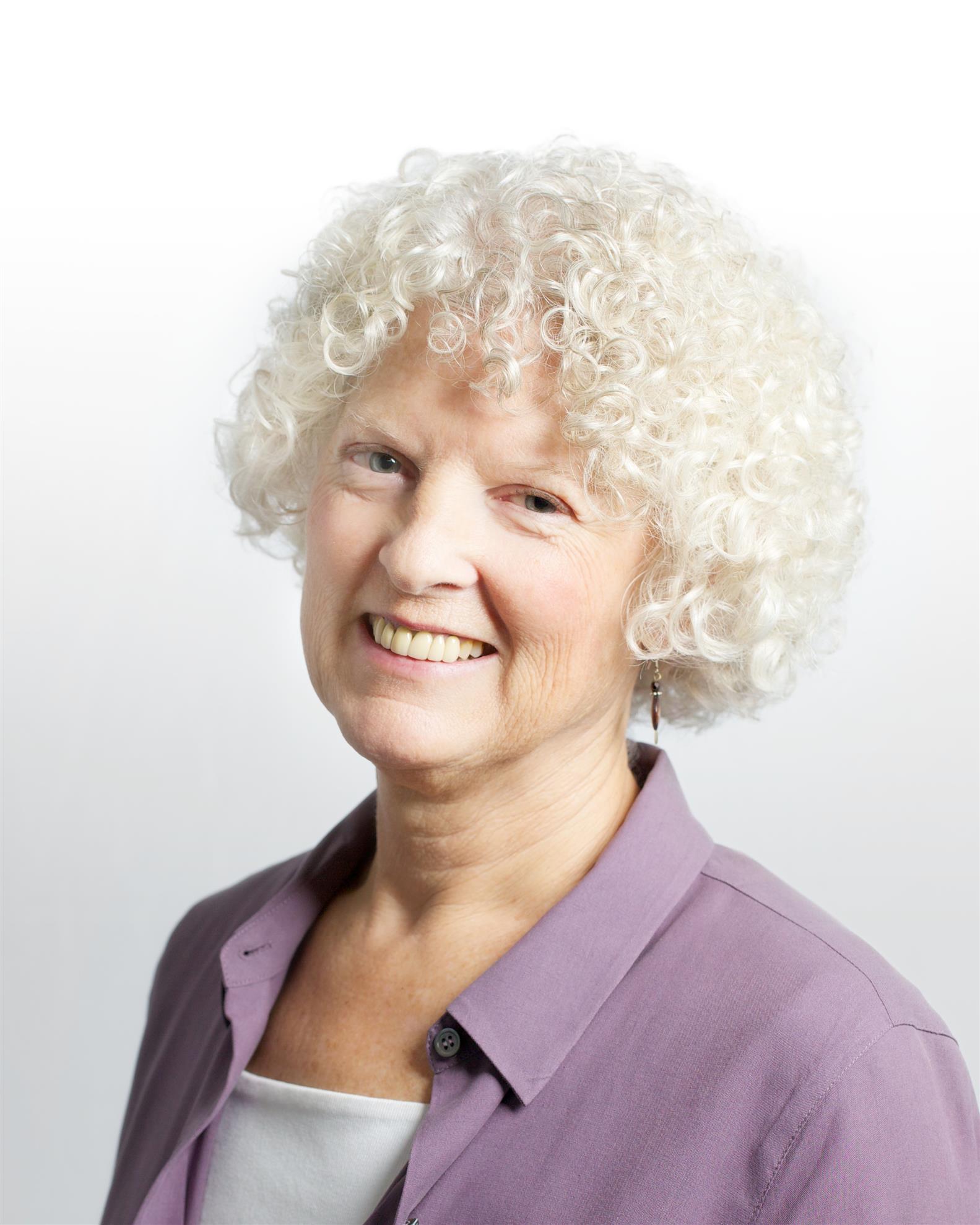
John Moffat introduced our guest, Dr. Marci Hipskind. Dr. Hipskind attended Washington State University for her undergraduate degree, the University of Washington for her Master’s Degree and went to medical school at Washington University in St. Louis.
Dr. Hipskind began by talking about her son. She noted that, prior to age 19, he was a straight A, healthy student. He went off to college. But soon, after beginning college, he began hearing voices and sometimes hallucinating. Her son spent three weeks in the hospital.
That was some 20 years ago. He continues to suffer from serious mental illness.
This led her to become involved with the “Whatcom Clubhouse” – a new non-profit in Whatcom County. The Whatcom Clubhouse opened in June of 2023 to serve those with serious mental illness, including her son, and their families. It will provide support, opportunity, and hope for those with a mental illness condition. It’s goal it to end social and economic isolation for the mentally ill in our community.
Dr. Hipskind noted the lack of services -including Whatcom County. The State of Washington is ranked 47th in the nation in providing mental health services. All local and state organizations are understaffed with high employee turnover. There are an inadequate number of psychiatrists and trained mental health providers and all operate in a time where mental illness exists in the confusion of whether it is a legal or health issue. She noted that there is an assumption that medication can resolve serious mental health issues – which isn’t true.
Dr. Hipskind noted some 8,000 people in Whatcom County suffer from serious mental illness, including 40% of inmates and a high percentage of the unemployed. Approximately 40% of the homeless have serious mental illness. This leads to increasing drug use and overdose. . She noted that a friend son, had serious mental health issues. He died at the Arnie Hanna pool facility from a drug overdose.
Victims of serious mental illness are often labeled as “inadequate, not fitting in and not worthy”. They become isolated as family and friends back away. Caring for the mentally ill can be exhausting, with relapses always lurking. A victim’s self-worth plummets.
She noted the difficulty of treating serious mental illness. For example, doctors often give guidance and advice – but mentally ill patients often don’t understand what they’ve been told and don’t follow up. They are often discharged from ER- with no effective follow up care.
Dr. Hipskind contended we need to provide early diagnosis, provide facilities for non-traumatic hospitalization and stabilization, provide family-oriented education and opportunity for rehabilitation and recover. Often this is working with the victim’s strengths.
Dr. Hipskind observed that the Whatcom Clubhouse is one of 320 around the nation. It provides hope and opportunities for local victims and their families with services and education. It is done in a safe and welcoming environment. The Whatcom Clubhouse works in a complementary way with psychiatric services and (for example) to secure employment in roles that can be performed by those with serious mental illness. It works on housing and other needs. The Whatcom Clubhouse attempts to fill some of the critical shortages in Whatcom County to serve the mentally ill and their families.