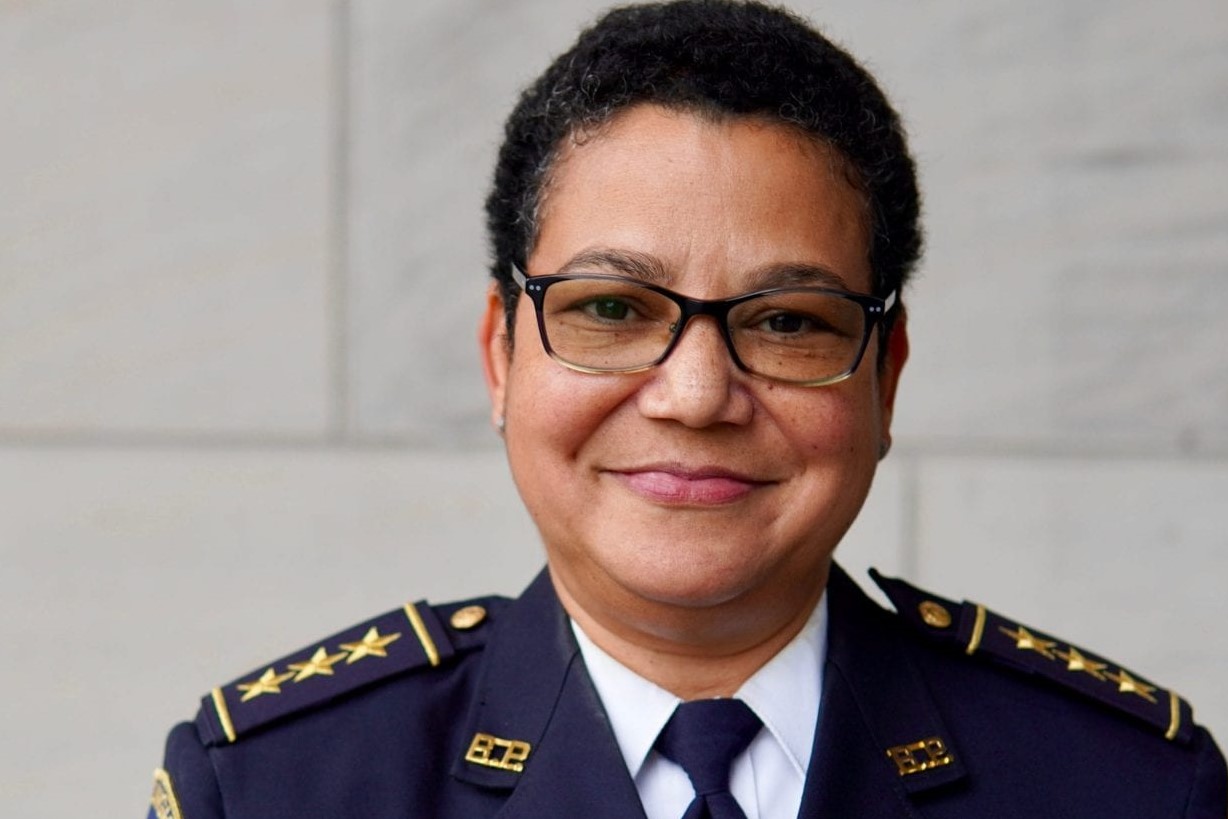
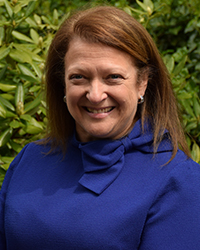
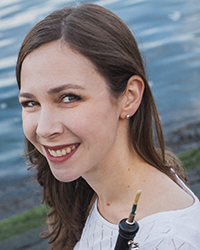
Flo Simon - Interim Chief, Bellingham Police Department, gave an excellent presentation titled, Then and Now.
Paul Grey noted this presentation falls within Rotary’s Promoting Peace focus. He introduced Chief Simon by mentioning she has been a commissioned officer with Bellingham for 23 years (!!!!) and has had during that time many and varied responsibilities from field patrol to bicycle patrol, from investigation to crisis negotiator. Chief Simon has been involved in the FBI national academy and now recruits trainees. Surely she will be missed when she retires after she finishing her service as interim Chief. She is not applying for the permanent position and instead will be tending to her six-year-old daughter. She is a member of the Bellingham Bay Rotary Club.
How has policing changed in the last five years?
These days police officers do a lot of social work, resulting in large part from homeless and behavioral health issues. 70% of their cases include a behavioral health component. De-escalation is an increasingly important part of the job.
Use of Technology
There have been major changes in the technology involved in policing. Officers are dispatched via mobile data terminals in their cars rather than dispatchers. BPD officers have been wearing body cameras since 2014 and have seen their value in resolving disputes and thus don’t leave the station without them.
Police cars are now all SUVs rather than sedans. They carry much more equipment (e.g., tasers, medical kits). Equipment increasingly is worn on chests and less on the belts.
BPD uses robots in cases involving potentially hazardous materials. They don’t weaponize their drones as the military might.
Defunding the Police
All protests these days involve some call to defund the police, even if the topic is not directly related to policing.
BPD remains fully funded and is not anticipating cutbacks. The budget is 85% salary wages and benefits. Cutbacks would force them to forego some of their existing training, which they see as essential to their current strong track record.
They’ve had to spend a lot of money to address tagging and other kinds of vandalism.
BPD does have one behavioral health officer whose caseload includes those who are calling the police most frequently.
BPD would like to add additional behavioral health officers to provide 24/7 coverage in conjunction with the other local groups prepared to respond to the growing need.
Other Groups With Crisis Response Capacity
There is an organization (MCOT) that can often respond to emergency calls in homes, schools, and shelters when “uniforms” are not needed.
The Whatcom GRACE (Ground-Level Response And Coordinated Engagement) program is a “community-based effort to find solutions for individuals who are high utilizers of emergency and criminal justice systems. The aim is to offer intensive, coordinated services to these “familiar faces” whose needs span beyond any single agency.”
Pace of Work
Interventions these days have slowed down dramatically. Rarely will police be seen ‘rushing in to bust doors down.’
Officers work for five days in a row and then have 4 days off. They are guaranteed 10 hours of sleep between shifts. Working with social justice issues full time can be exhausting.
Recruiting Officers
When Chief Simon started, there were 300 people seeking to become officers. Today they are lucky if they find 15 candidates who also want to stay in the community. Presently they have 7 new recruits and are expecting 6 officers to retire.
What is the future?
They’re reimagining police work. Activity will include an oversite board. Canines will be off-leash when necessary.
Some tools are being taken away because of a few actions across the country. BPD rarely uses force. They train at twice the rate of the rest of the country.
How can we best support the police?
BPD feels supported by the community. To provide further support, supportive comments at City Counsel are always appreciated. Thank you notes and spontaneous comments to officers on the streets are highly valued.
Other local issues
Opioids. Haven’t seen an escalation in opioid deaths locally.
Unhoused/Homeless. Over 700 people were identified as unsheltered in a recent Bellingham survey. The tiny villages seem to be working well. Small groups do seem to work better than larger groups. They’ve been great to work with and police check-in with leadership at least once a week. We will probably see more of villages popping up. Unfortunately, tiny houses and shelters don’t work for everyone; no good alternative solutions have been found. Base Camp has been full for two months. Chief Simon noted there is no requirement for daily prayer at Base Camp.