Presentations:
Paul Harris Award: Rud Browne received his 8th Paul Harris Fellowship award to a well deserved standing ovation from Club members.
Service Grant Award: Del VandeKerk presented a $1,000 check to Mark Molder, representing Wildbird Charities, for their Starfish Program, which provides all of the weekend meals throughout the school year to food insecure students in Whatcom County. Approximately 1/6th of the students in Whatcom County are currently food insecure, and this program feeds 650 of them each week, almost double last year's total.
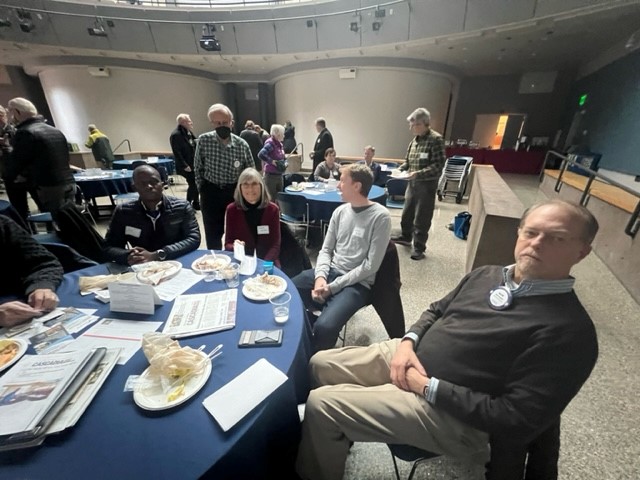
ARES Program: Mark Knittel introduced Ian Muiri, who is the Kenyan director of the ARES program which Mark leads. Ian was in Austin, Texas to receive an award related to his work with ARES and came to Bellingham to meet with our Club.
Ian talked of the impact that the ARES program is having in Kenya. It has helped to educate about 95 thousand Kenyans. Now it is helping to educate over 10 thousand preschoolers. Ian discussed how education dovetails with ecological conservation. He used the example of the white rhinos.
Program:
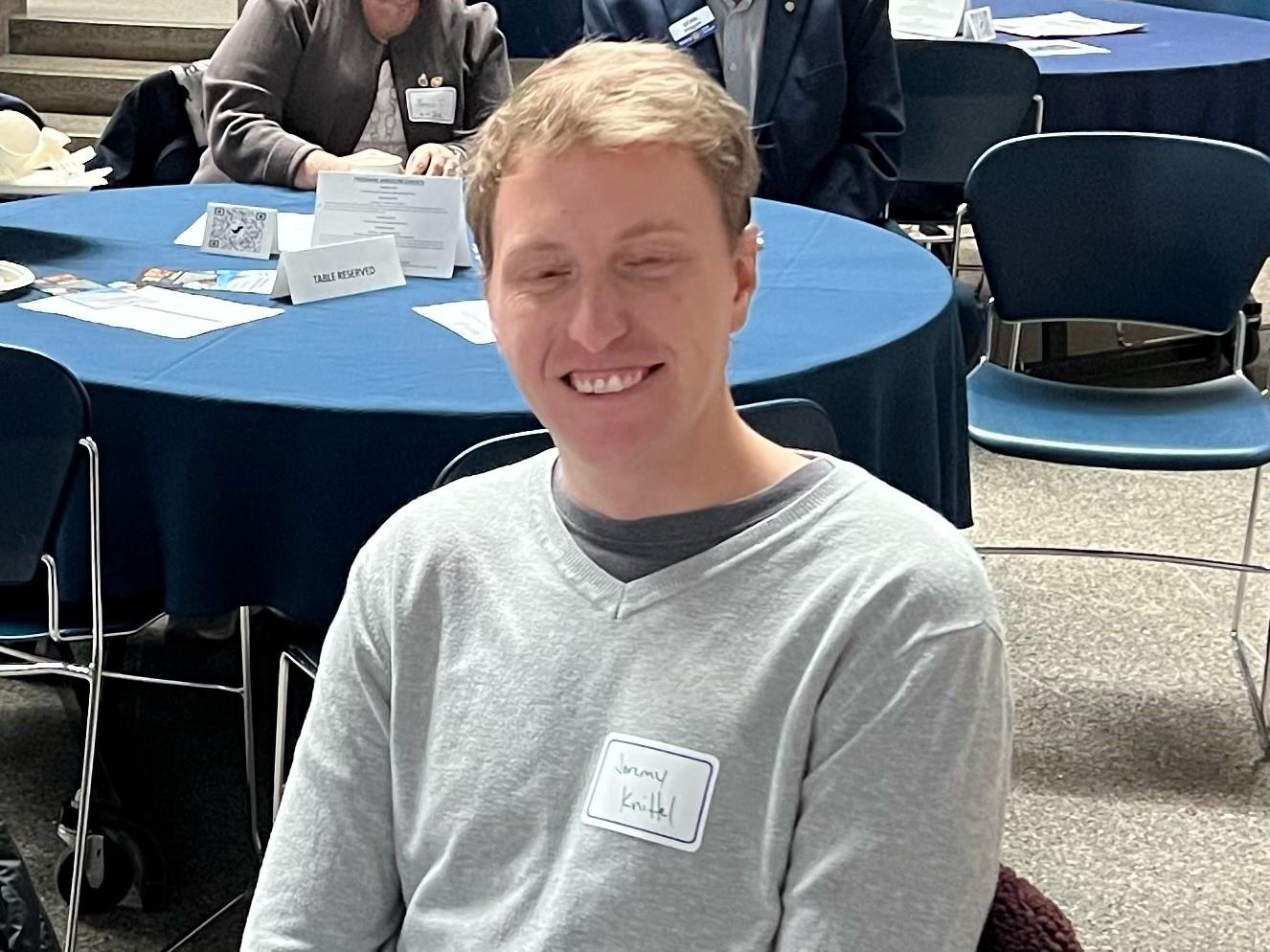
Mark introduced his son, Jeremy, whose presentation was titled: Google Maps for Space: Navigating Around the Solar System. After obtaining Bachelors, Masters and Doctorate degrees in Aerospace Engineering, Jeremy worked for NASA in multiple locations for about ten years. For the past five years, he has worked at KinetX Aerospace, a NASA contractor, as a navigation specialist for deep space missions. As with Google Maps, this includes location finding, route options and navigation. In the other aspects of deep space navigation, the Google Maps analogy doesn't work because:
1. GPS isn't available in deep space
2. Both the starting and destination points are moving
3. Deep space involves 3 dimensions rather than 2
4. Navigating is not limited by roads
5. Spacecraft can't refuel in route
6. Spacecraft is being driven remotely
Jeremy described how deep space navigation is an inexact science. There are numerous uncontrollable variables which can affect how fast and in what direction the spacecraft is moving, starting with lift-off. It is his job to take these variables into account and figure out where the spacecraft is at any time. Location finding is especially important when the spacecraft is undergoing a planned maneuver, such as a close fly-by of a planet. He can’t tell the space vehicle where to go without knowing where it is.
It’s a good thing Jeremy likes math. A big part of his job is to take this information and make those course corrections, which he can do, calculating like Kepler, Galileo, Copernicus and others have done for centuries. He explained how it is done, thankfully not requiring Club members to do any of the math. Jeremy also mentioned that intuition plays a part in completing the calculations. So, it takes experience as well as acumen to drive a spaceship remotely.
To whet our appetite for space exploration, Jeremy showed an image of Pluto from the Hubble space telescope. All that was visible was a collection of pixels that did not even resolve into a sphere. Then, he showed us a photograph of Pluto taken by the New Horizons spacecraft as it flew past the planet. There was a very clear picture of a real planet, with mountains and everything!
Jeremy also shared with us the flight of OSIRIS-REx, which flew to an asteroid, named Bennu, to grab a rock sample to return to earth. It was launched in 2016, got a gravity assist, boosting its speed, in 2017, and arrived at Bennu in January, 2018. It orbited the asteroid for a couple of years in order tofind a relatively safe landing area.
Then, in October 2020, as Jeremy showed us in a remarkable video, the spacecraft performed a touch and go maneuver, where it literally bounced off the surface, grabbing a sample of soil at the same time. It will return the sample to earth in 2023 via a packet, then continue its mission to another asteroid in 2025.
Closing:
President Paul reminded members about the Board of Directors meeting this coming Thursday; all are welcome to attend; contact Sandee for details. President Paul then thanked all members who assisted with today's meeting and rang us into adjournment at 1:30 PM.